
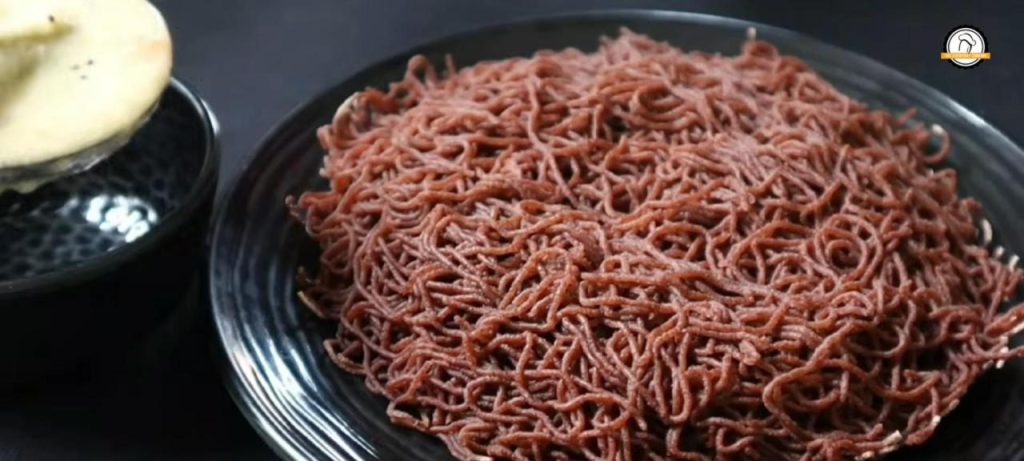
Ragi idiyappam with Tirunelveli sothi is one of our favourite wholesome South Indian breakfasts – soft, steamed finger millet string hoppers served with a mild, creamy coconut milk and moong dal stew loaded with vegetables. In Tamil we call it kezhvaragu idiyappam, and sothi is the much-loved Tirunelveli side dish traditionally made for idiyappam.
We love this combo because it feels comforting and light at the same time. The idiyappam is simply steamed with just a teaspoon of ghee, and the sothi gets its richness from coconut milk and protein from moong dal, so there is no deep frying anywhere on the plate.
If you are following a diabetic-friendly or weight-loss meal plan, this is a lovely breakfast to add to your week. Ragi is a whole-grain millet with natural fibre and calcium, and pairing it with dal and vegetables makes the meal more balanced and filling. As always, keep an eye on portion size – one serving here is about one cup of idiyappam with half a cup of sothi.
Making idiyappam at home is easier than it looks. The key is to roast the ragi flour well and knead it with hot water into a soft dough. The sothi comes together while the idiyappam steams, so breakfast is ready in under an hour.
Below you will find the full recipe card with ingredients, calories and nutrition, followed by step-by-step photos from our Tamil video.


Ragi Idiyappam with Tirunelveli Sothi
Ingredients
For Ragi Idiyappam
- 1 cup ragi flour finger millet flour
- 1 tsp ghee
- salt as required
- 1 cup hot water approximately, add gradually
- oil for greasing
For Grinding (Sothi Masala)
- 1 tsp oil
- 1 tbsp coriander seeds
- 1 tsp cumin seeds
- 3-4 garlic cloves
- 1 inch ginger
- 1-2 green chillies
For Tirunelveli Sothi
- 1 tsp oil
- 1/4 cup onion chopped
- 1 drumstick cut into pieces
- 1-2 carrots cubed
- 1 potato cubed
- salt as required
- 1 cup coconut milk first addition
- 1 cup moong dal cooked
- 1/2 cup coconut milk second addition
- 1/2 lemon juice
For Tempering
- 1 tsp oil
- 1/2 tsp mustard seeds
- 1/2 tsp urad dal split black gram
- curry leaves a few
Instructions
Ragi Idiyappam
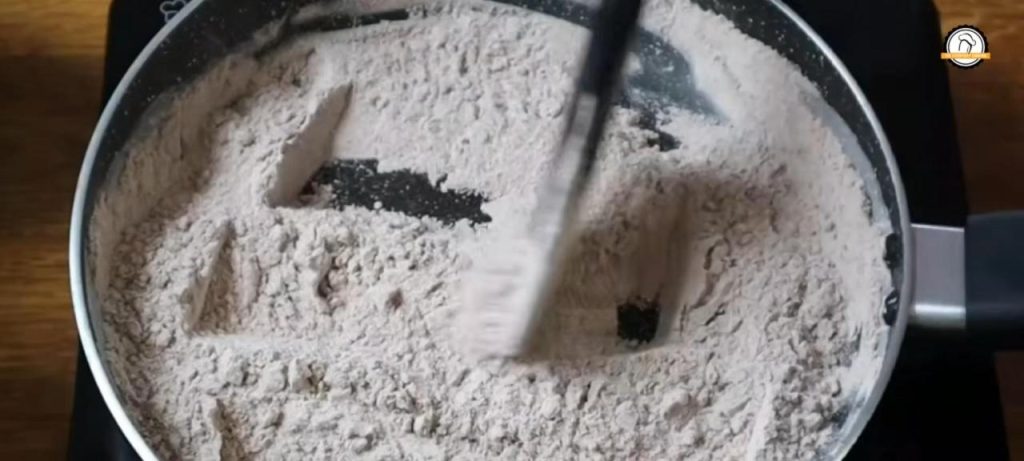
- Dry roast 1 cup ragi flour in a pan on low flame for 3 to 5 minutes, stirring continuously. Transfer to a bowl.
- Add salt and 1 tsp ghee to the roasted flour and mix well.
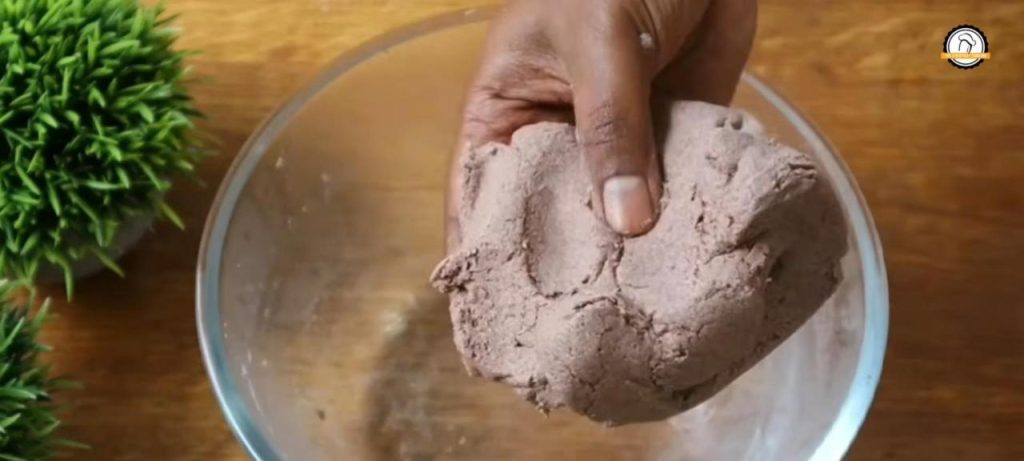
- Add hot water little by little, mixing with a spoon first, then knead into a soft, smooth dough.
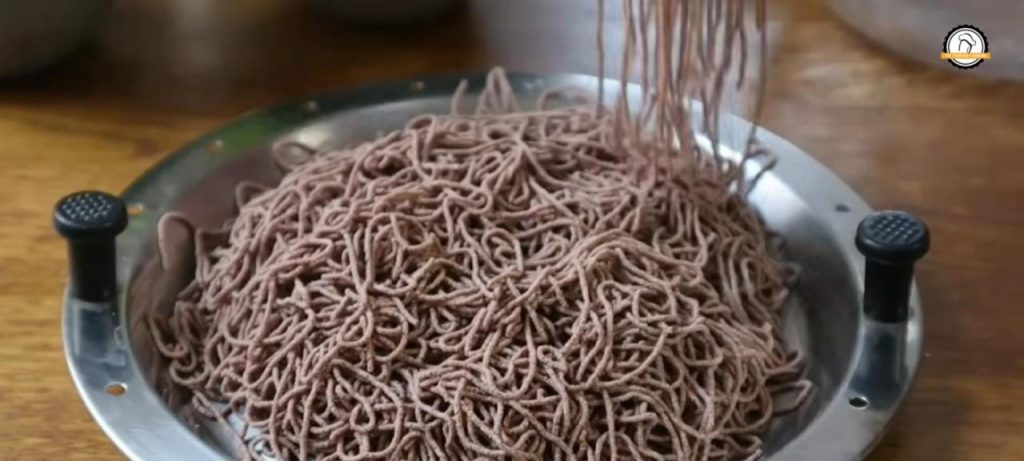
- Fill the dough into a greased idiyappam press and press the strands onto a greased idli or steamer plate.
- Steam for 10 to 15 minutes until cooked.
Tirunelveli Sothi
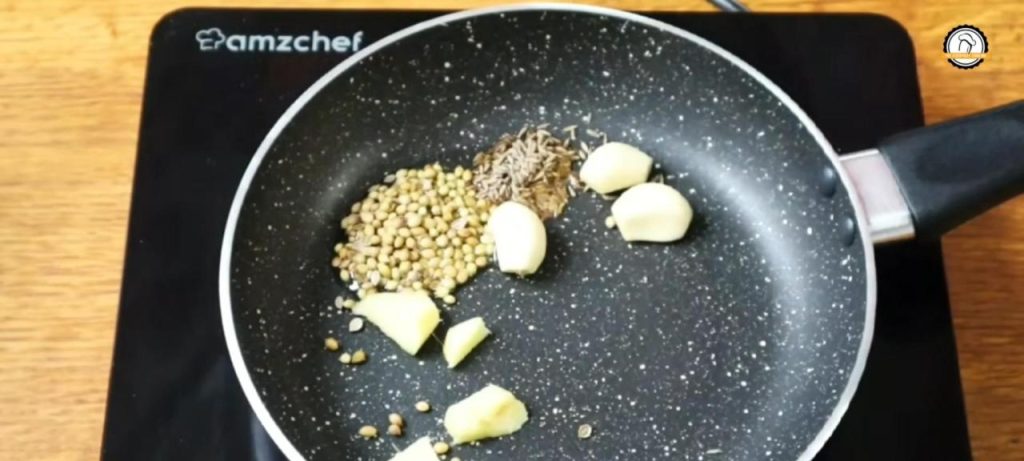
- Heat 1 tsp oil and sauté the coriander seeds, cumin seeds, garlic, ginger and green chillies for a minute. Cool, add a little water and grind to a smooth paste.
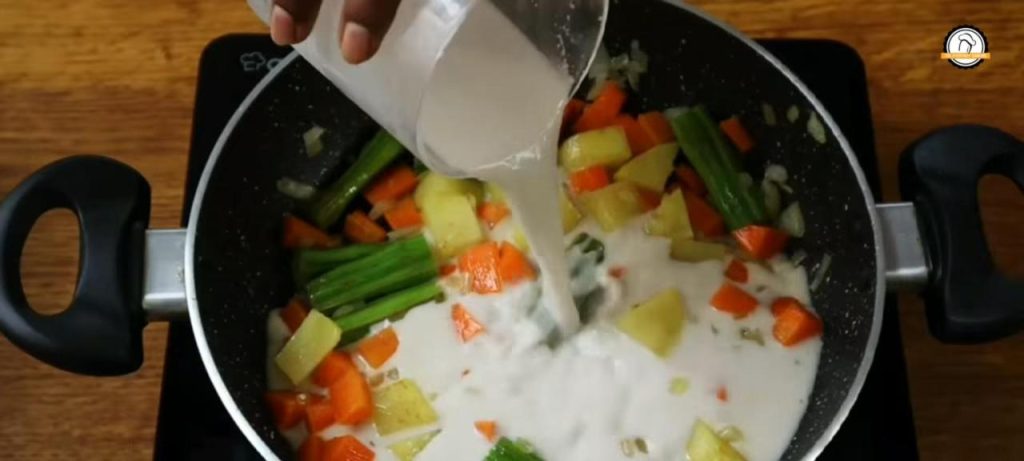
- In another pan, heat 1 tsp oil and sauté the chopped onion. Add the drumstick, carrot and potato with salt and sauté for a minute.
- Pour in 1 cup coconut milk, cover and cook until the vegetables are soft.
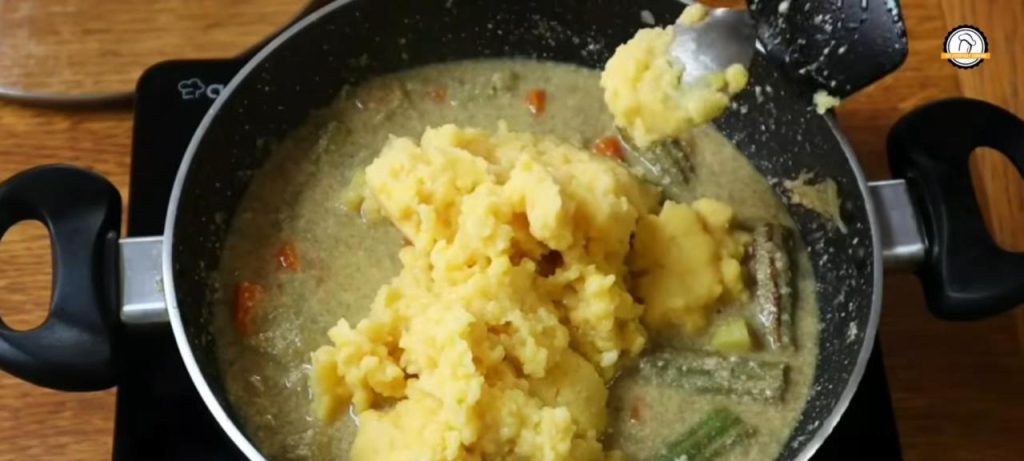
- Add the ground masala paste and mix well. Then add the cooked moong dal and stir to combine.
- Add the remaining 1/2 cup coconut milk, heat through and switch off. Squeeze in the lemon juice.
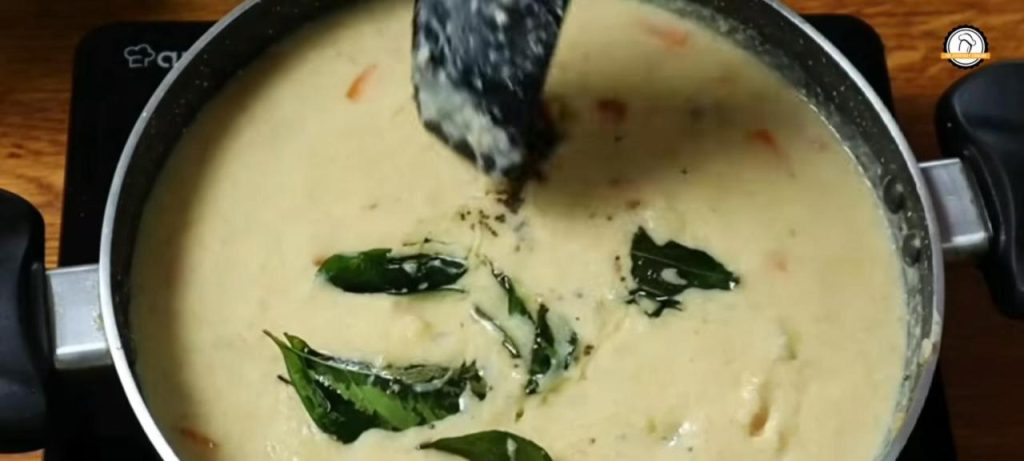
- For tempering, heat 1 tsp oil, add mustard seeds, urad dal and curry leaves, and pour over the sothi.
- Serve the hot ragi idiyappam with the sothi.
Video
Notes
- Roast the ragi flour on low flame so it doesn’t burn.
- Use hot water to make the dough; it keeps the idiyappam soft.
- Add the final coconut milk at the end and don’t boil it hard, so it doesn’t split.
- Add lemon juice only after switching off the stove.
- Nutrition is per serving (about 1 cup idiyappam + 1/2 cup sothi), based on the values shown in the video.
Follow this easy ragi idiyappam and Tirunelveli sothi recipe with step-by-step instructions and photos to make a healthy South Indian breakfast at home.
How to Make Ragi Idiyappam with Tirunelveli Sothi (Step-by-Step)
1. Roast the Ragi Flour
- Dry roast 1 cup ragi flour on low flame for 3 to 5 minutes, stirring all the time.
- Transfer the roasted flour to a mixing bowl.
2. Make a Soft Ragi Dough
- Add salt and 1 tsp ghee and mix.
- Pour in hot water little by little (about 1 cup), mixing with a spoon.
- Once it is cool enough to handle, knead into a soft, smooth dough.
3. Press and Steam the Idiyappam
- Fill the dough into a greased idiyappam press.
- Press the strands in circles onto a greased idli or steamer plate.
- Steam for 10 to 15 minutes until cooked.
4. Prepare the Sothi Masala
- Heat 1 tsp oil and add 1 tbsp coriander seeds, 1 tsp cumin seeds, garlic, ginger and green chillies.
- Sauté for a minute, cool, then grind to a smooth paste with a little water.
5. Cook the Vegetables in Coconut Milk
- Heat 1 tsp oil and sauté the chopped onion.
- Add drumstick, carrot and potato with salt and sauté briefly.
- Pour in 1 cup coconut milk, cover and cook until the vegetables are soft.
6. Add the Masala and Moong Dal
- Add the ground masala paste and mix well.
- Add 1 cup cooked moong dal and stir until combined.
- Add the remaining 1/2 cup coconut milk and heat through without boiling hard.
7. Finish with Lemon and Tempering
- Switch off the stove and squeeze in the juice of half a lemon.
- Heat 1 tsp oil, add mustard seeds, urad dal and curry leaves, and pour over the sothi.
Enjoy your soft ragi idiyappam with hot, fragrant Tirunelveli sothi – a comforting, healthy breakfast the whole family will love!
Tips to Make Perfect Ragi Idiyappam and Sothi at Home
- Roast the flour well: roasting ragi flour on low flame removes the raw smell and helps make softer idiyappam.
- Use hot water: knead the dough with hot water so it stays soft and easy to press.
- Grease the press and plate: a little oil stops the strands from sticking.
- Don’t boil the final coconut milk: just heat it through so the sothi stays smooth and doesn’t split.
- Add lemon at the end: squeeze the lemon after switching off the stove for a fresh, tangy finish.
Frequently Asked Questions
1. Is ragi idiyappam good for diabetics?
Ragi is a whole-grain millet with more fibre than rice flour, so ragi idiyappam is a better everyday choice than regular idiyappam. It is still a carbohydrate food, so keep portions moderate, pair it with dal and vegetables like this sothi, and follow your doctor’s or dietitian’s advice.
2. Is this breakfast good for weight loss?
Yes, it can fit well into a weight-loss plan. The idiyappam is steamed, the sothi uses very little oil, and the dal and vegetables add protein and fibre that keep you full.
3. Is ragi idiyappam gluten-free?
Yes, pure ragi flour is naturally gluten-free. Check the label if you buy packaged ragi flour to make sure it isn’t mixed with wheat.
4. Can I use a lighter coconut milk?
Yes. You can use thin coconut milk for cooking the vegetables and a smaller amount of thick coconut milk at the end to keep the sothi lighter.
5. How do I store leftovers?
Store idiyappam and sothi separately in airtight containers in the fridge for up to 1 day. Steam the idiyappam briefly and gently reheat the sothi without boiling before serving.